
Types of Insulation for Insulated Security Roll Up Doors
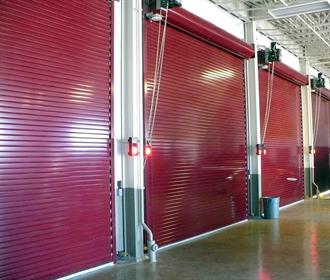 Insulated coiling doors are becoming increasingly popular. That is because they help reduce energy bills and protect buildings from outside elements. Coiling doors with insulation are a protective barrier against the cold or heat and other exterior elements, as well as for keeping heating or air conditioning inside a space. As you may imagine, insulated roll up doors are especially important for people that live in either very cold or very hot regions. Installing insulated doors for your building can trap and keep cold/hot air inside – preventing it from escaping, as well as stopping exterior cold or hot air from getting in.
So, what are the insulated roll up door benefits?
- Increased energy efficiency because the overhead coiling doors are designed to keep the outside air from coming in and the inside air from escaping outside.
- Reduced noise when the rolling door is operated because the insulation acts as a sound buffer.
- Durability due to the additional layers of door insulation.
Mineral Wool (Rock Wool) Insulation
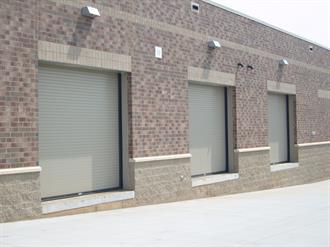 Simply put, you want to use mineral/rock wool insulation in a insulated fire door because it can withstand extreme high temperatures. This type of door insulation is made by melting down basalt stone and recycled slag from steel mills, then spinning it into fiber that can be formed into boards – pretty cool huh? In a fire, the batts retain their shape and offer better protection against the spread of flames. This fire door insulation also does not absorb water and stays intact even when wet. The rock-wool fibers are compacted so tightly together that there’s zero chance of the insulation shifting out of position or slumping down, which would dramatically decrease its door insulating value. Mineral wool batts are denser than other types of insulation, making them ideal for overhead door soundproofing. This type of insulation also has a higher R-value than traditional fiberglass insulation. R-value is a measure of thermal resistance to heat flow. The higher the R-value, the better the insulation in the door.
Foamed in Place Door Insulation
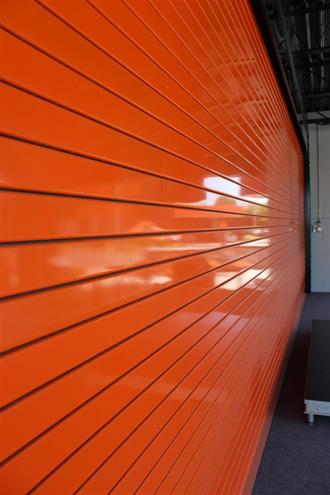 Consider the new standard for insulation! Foamed in place insulation offers superior protection against the elements, improved security, and reduced sound transmission. Polyurethane insulation delivers twice the thermal performance of polystyrene insulation of the same thickness! It also adds strength and rigidity to the door panels and helps dampen sound transmission.
Today, most foam materials use foaming agents that are eco-friendly. There are two types of foam in place insulation: closed-cell and open-cell. Both are typically made with polyurethane. With closed-cell foam, the high-density cells are closed and filled with a gas that helps the foam expand to fill the spaces around it. Open-cell foam cells are not as dense and are filled with air, which gives the insulation a spongy texture. The type of insulation you should choose depends on how you will use it. While closed-cell foam has a greater R-value and provides stronger resistance against moisture and air leakage, the material is also much denser and is more expensive to install. Open-cell foam is lighter and less expensive but should not be used where it could absorb water.
Laid in Place Door Insulation
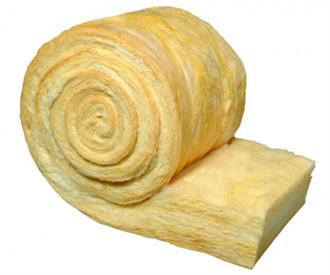 Looking for something a little more traditional? Laid in place insulation is one of the least expensive ways to insulate your roll up door. Available in rolls and pre-cut panels, laid in place insulation is very flexible. Its snug fit will help stop airflow and the transfer of heat. When installed correctly, it is very energy efficient. It also maintains its effectiveness because it does not settle over time. Laid in place insulation is made from sand and recycled glass. As a result, it is naturally fire retardant throughout its life. This insulation can also reduce the level of noise coming into the building due to the natural sound-dampening properties of fiberglass. This door insulation is available in a range of R-values, including medium and high density blankets.
When it comes to deciding on an insulated roll up door, while there are various types of insulation, it’s important to use the correct type of insulation for your specific needs in order to obtain maximum efficiency.

Cookson continues to lead in innovations in roll up door, security gate and closure products. To inquire how Cookson’s experts and customer service can help you with your next roll up door project, call 1-800-294-4358
