
2026 Update: 6 Common Rollup Door Problems and How to Fix Them
Follow our troubleshooting guide to discover the common reasons your rollup door won’t work, how to troubleshoot, and when it’s time to call a professional.
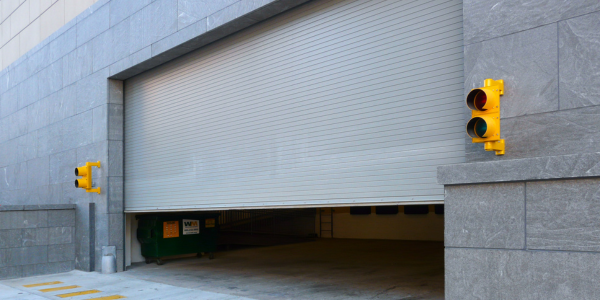
Your rollup door is a workhorse. It keeps your business running smoothly—boosting security, improving workflows, and even helping you save on energy bills. However, just like any piece of equipment that’s used frequently, these doors can begin to wear down. How long they last—usually 10 to 30 years or more—really comes down to how well you maintain them.
This guide is your quick resource for troubleshooting, maintenance, and repair. We'll start with what's new for commercial doors in 2026, and then move on to common issues. Follow this troubleshooting guide to figure out why your door isn’t operating properly and, more importantly, to know when it’s time to call in the pros.
Key Takeaways
- • In 2026, the rolling door industry is poised to deliver stricter fire safety standards, smart integrated technologies, and green building solutions.
- • The six main reasons a door fails are easy to check (power, dirt, broken springs, misalignment, motor issues, or wrong spring tension) and can help you catch potential issues ahead of time.
- • A routine maintenance plan is key to keeping your door in good working order all year round and can extend its overall lifespan.
Commercial Rollup Door Code Updates, Trends, and Challenges for 2026
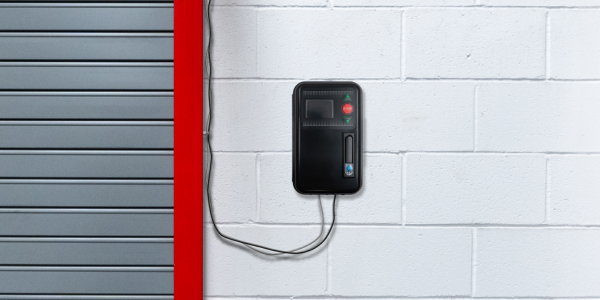
The commercial door industry is focused on three main things for 2026: fire safety, smart technology, and building resilience. Staying up-to-date on these trends will help you avoid unnecessary risks and ensure your property is compliant.
Notable Code Updates and Trends
- New fire safety standards: The National Fire Protection Association (NFPA) 80 now requires that annual inspections and safety drop tests for fire doors must be completed by a certified "Trained Rolling Steel Fire Door Systems Technician."
Industrial rolling fire doors are complex, life-saving investments that cannot be tested and reset with guesswork. Now, your technician must show documented evidence of Authority Having Jurisdiction (AHJ) training. This heightened standard means you gain peace of mind knowing your fire door systems are maintained by a verified expert, ensuring compliance, protection, and reliable performance.
- Smarter security is here: Security isn't just about heavy-duty hardware; it's about intelligent protection and effortless management. Look for advanced security features like anti-lift locks and reliable automatic closing systems. Hooking your door up to your building system allows for remote monitoring, management, and smooth operation.
- Energy Efficiency, sustainability, and resiliency: In 2026, the focus remains on making buildings sustainable and resilient. New rollup doors are being used to tighten up the building envelope, which means huge improvements in thermal performance and energy savings.
You’ll see higher demand for specialized products like wind-resistant doors, high-performance systems, and heavily insulated doors that can stand up to extreme temperatures.
6 Reasons Your Commercial Rollup Door Won't Close or Open
Is your rollup door uneven? Does it struggle to open or close all the way? If so, it's likely experiencing any number of potential issues that an overhead door can encounter throughout its lifetime. Luckily, many of these problems are preventable as long as you understand how they arise and how to address them. Here are six possible reasons why your commercial rollup door is giving you trouble.
1. Power Issues
Loss of power is the most common reason to begin commercial overhead door troubleshooting. First, confirm if the issue is a general facility outage or an isolated electrical incident affecting the door's dedicated circuit. If building power is on, the problem may be a tripped circuit breaker or a blown fuse. Other potential causes include a desynchronized remote, a faulty wall switch, or damaged internal electrical wiring. Always secure the power supply before inspecting any electrical components.
RELATED: Motors and Battery Backup Devices for Rolling Doors
✅ What To Do:
- Check for a building-wide outage: Confirm your issue is isolated.
- Check breaker/fuse: Inspect your circuit breaker. Reset if tripped.
- Test controls: Replace remote batteries if the wall switch works but the remote doesn't.
- Listen to your motor: A buzzing motor indicates a mechanical jam, not a power outage.
🔴 When To Call A Pro:
- Basic troubleshooting does not resolve the issue.
- The problem involves internal motor components or wiring.
- You hear unusual buzzing or grinding.
2. Obstructed or Misaligned Tracks
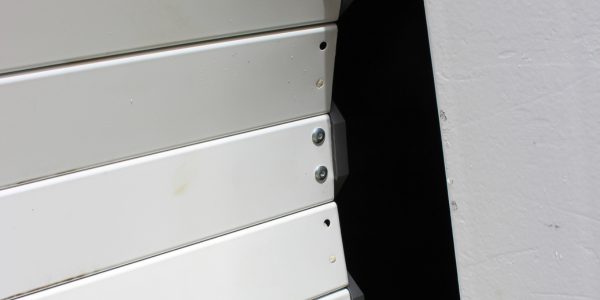
Years of built-up dirt and debris, or small objects, can accumulate in your door tracks (guides). This can make your garage door system difficult to operate and impede the door’s travel, causing it to slow, get stuck, or make grinding and scraping sounds.
Not all issues are simple to resolve: while twigs and light dust are easy to remove, heavy, caked-on grime or physical damage to the door guides is more serious. Continuous friction can eventually lead to misaligned tracks, which seriously impacts the curtain and motor.
Pro Tip: Add door guide cleaning and inspection to your monthly maintenance plan! This keeps your door system operating at maximum performance.
✅ What To Do:
- Disconnect the power: Turn off power to prevent accidental activation.
- Inspect guides: Look for dirt, debris, and small dents.
- Clean guides: Use a vacuum or brush, then wipe with a damp cloth. Do not use heavy grease.
🔴 When To Call A Pro:
- There is caked-on dirt you can't remove.
- You see bent, damaged, or physically misaligned guides.
3. Worn or Broken Parts (Torsion Springs, End Bearings, Cables)
Like all heavy-duty industrial equipment, commercial overhead doors have a finite life cycle. High-frequency usage accelerates wear on critical components, like high-tension torsion springs, end bearing plates, and cables. To maintain reliable door operation, you want to catch potential wear or damage before the problem becomes dangerous or leads to significant downtime.
Torsion springs: High-tension springs responsible for the upward and downward motion of your door, located horizontally in the opening inside a barrel or a shaft. Standard door springs are heavy-duty and can withstand up to 50,000 cycles, with high-cycle springs handling as many as 100,000 – 500,000 cycles.
With such frequent, heavy use and environmental exposure, these springs are subject to wear and fatigue. If you hear a loud “bang” or “snap”, you likely have a broken torsion spring, especially if the door immediately stops working.
⚠ DANGER
Do not attempt to touch or repair torsion springs yourself. Extreme tension can cause severe injury.
End bearing plates: The end bearing plates are another critical wear area, designed to support the weight of both the door and the assembly. Over time, friction causes them to wear, resulting in a grinding sound and forcing your door system to work harder. Severely worn end bearing plates can bind up, preventing movement and knocking your commercial door out of alignment. Over time, your end bearing plates may begin to grind, forcing the rollup door to work harder and operate noisily.
You can detect signs of wear by finding black dust or powder around the component, which indicates metal-to-metal grinding.
Cables: Cables aren’t included on all door models. Doors that operate with cables work in tandem with your torsion springs to balance the door's weight and lift it. These are under high tension and can become frayed, broken, or loose due to friction and age.
A damaged or loosened cable causes the door to lift unevenly, which can quickly lead to binding, misalignment, and cause the door to free-fall.
✅ What To Do:
- Disconnect power immediately: Stop the motor from trying to lift a broken door.
- Stop all operations: Do not attempt to open the door manually. A door with a broken spring is extremely heavy and dangerous.
🔴 When To Call A Pro:
IMMEDIATELY. Do not touch these parts.
- Broken Springs (loud bang/snap).
- Frayed or snapped cables.
- Black dust/powder around bearings (metal-on-metal grinding).
4. Misaligned Components Or Installation Issues
Misaligned parts are a common source of operational failure for rollup doors. Specifically, misaligned hoods, fascias, and tracks, or guides that are too tight. These problems can force your door to scrape against the guides. This damages your property and strips the paint and finish from your curtain slats, affecting both the door’s look and performance. It’s important to fix misaligned components before problems escalate. If not, you’re looking at even more repairs down the road.
Besides misaligned parts, you’ll want to look out for rust and corrosion on your guides. Rust can make your guides uneven and impact how your rollup door travels within the guides. If the guides become misaligned, a domino effect can occur with other system components: the curtain could sustain damage as it crosses over this uneven path, or the motor could ultimately burn out from the excessive workload.
RELATED: How to Prevent Salt Stains on Your Commercial Doors This Winter
✅ What To Do:
- Stop using the door: Turn off power.
- Visual Check: Look for gaps around the frame or visible sagging.
- Listen: Scraping or metal-on-metal sounds indicate alignment failure.
🔴 When To Call A Pro:
Realignment requires loosening the guides and adjusting the barrel assembly. This is a two-person professional job.
5. Motor Malfunctions or Sensor Failures
If your electric rollup door won't open, the jam could be due to a motor-based issue. Because motors have complex parts, it can be hard to pinpoint the exact cause without the expertise of an overhead door professional. If you decide to give the motor a preliminary inspection before calling, make sure the door is turned off, as well as the power supply.
While complete motor failure is easier to detect, you may have an issue where the motor fails to sync with the remote or wall switch. Faulty sensors are another common malfunction of motor-powered doors. When this happens, your overhead door won't be able to sense obstructions and subsequently reverse or stop.
RELATED: Commercial Door Entrapment Protection Devices Explained
✅ What To Do:
- Check power connections: Ensure the plug is tight.
- Inspect Photo Eyes/Sensors: If sensors aren't pointing at each other, gently adjust them until the light is solid.
- Clean Sensors: Wipe sensors with a dry cloth.
🔴 When To Call A Pro:
- Motor hums but doesn't move.
- Door has power but is unresponsive.
- You suspect major issues with your spring, tracks, slats, or other damage.
6. Incorrect Spring Tension
Both manual and motor-operated commercial rolling door springs have to have the perfect tension to balance their weight. Many of the symptoms of incorrect spring tension are the same for both door types. It’s a little harder to identify the issue on a motor-operated door, as the the problem could be either the springs or the motor.
Generally, you can determine incorrect spring tension:
- If your door is tough to close or opens too easily.
- If your door is tough to open and slams shut.
- If your door slams shut when it’s halfway open.
- If your door can’t stay open on its own.
- If your door makes uneven movements or the motor makes grinding sounds.
✅ What To Do (Test Only):
Disconnect the door from the opener and lift it manually to waist height.
- Good: It stays in place.
- Bad: It slams shut or shoots up.
🔴 When To Call A Pro:
Do not attempt to adjust spring tension yourself. Working with high-tension springs is dangerous unless you have proper training and the necessary tools. A garage door technician can safely inspect and adjust your rollup door tension.
Preventive Commercial Rollup Door Maintenance Checklist
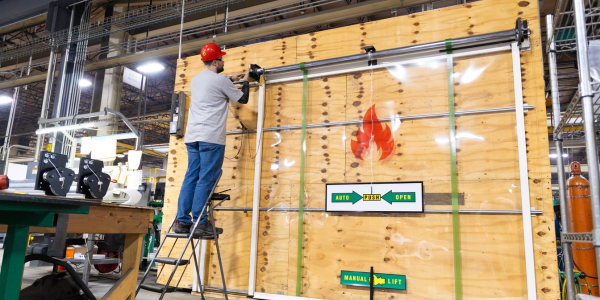
Catch problems before they happen. Routine maintenance and checks are the best way to increase the lifespan of your rolling door investment and avoid costly repairs.
Here’s a simple, actionable plan to keep you on schedule.
| Area to Inspect | Frequency | What to Do | Why It Matters |
|---|---|---|---|
| Visual Inspection | Weekly / Monthly | Look for uneven movement, scraping, or gaps between the curtain and frame. Listen for unusual sounds. | Catches alignment issues early. |
| Track and Guide Cleaning | Quarterly (more in dusty/corrosive environments) | Vacuum dust/debris. Wipe with mild soap. | Prevents friction and jamming. |
| Lubrication | Quarterly | Apply non-grease lube to tracks/bearings. | Reduces friction/noise. (Avoid grease!) |
| Safety Sensors | Monthly | Test auto-reverse with a non-damaging object. | Critical for safety compliance. |
| Fasteners and Hardware | Quarterly | Check for loose hardware on tracks, motor, and curtain ends. | Prevents misalignment, vibrations, and premature failure. |
| Remote/Operator Check | Monthly | Test remotes/wall switches for communication. Change remote batteries when operation is intermittent. | Guarantees reliable access and prevents being locked out or in. |
| Professional Inspection/Service | Bi-Annually (Quarterly for high-use/older doors) | Schedule a certified technician for drop tests/tension checks. | Required for warranty & safety. |
Retrofits and Preventative Maintenance For Your Commercial Rollup Door
For a lot of industrial buildings, your rollup doors are the center of your building operations. From high-traffic warehouses to busy parking garages, your door needs to be in tip-top shape every day. Maintaining your commercial door or commercial grille system is a must to prevent downtime.
Luckily, your local authorized Cookson commercial door experts don't just fix doors—they focus on extending the life of your entire system through retrofits and Preventive Maintenance (PM) plans.
| PM Plan Benefit | How It Helps Your Business |
|---|---|
| Increased Lifespan | Regular maintenance extends the life of springs, bearings, and motors. |
| Assured Compliance | Ensures NFPA 80 fire door drop tests are performed on schedule. |
| Guaranteed Safety | Critical high-tension parts are inspected regularly. |
| Priority Service | PM clients often receive priority scheduling and reduced labor rates. |
Retrofit Your Commercial Rollup Door Or Security Grille With 2026 Technology
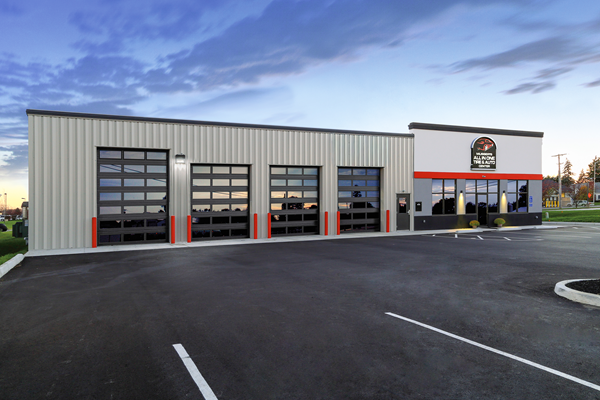
Retrofitting your existing doors gives you the latest 2026 door technology, including security, efficiency, and intelligence, without the cost of a full replacement. Your local Cookson Authorized Dealer can upgrade your current doors by integrating key modern components:
• Smart Automation & Sensors: Cookson Door Technicians can recommend and install smart sensors and control systems that allow for remote monitoring, operation, and, most importantly, predictive maintenance. These upgrades let your door tell you when a component needs attention before it fails.
• Enhanced Security Hardware: Upgrade older lock mechanisms and controls with the latest anti-lift and heavy-duty security features for enhanced protection.
• Performance Components: Replace standard components with high-cycle springs, high-performance motors, and insulated slats to boost speed, thermal efficiency, and overall durability.
Contact a Cookson Rollup Door Expert
Whether you need an immediate repair, are looking to retrofit your current rollup doors or security grilles with new technology, or want to set up a comprehensive Preventive Maintenance Plan (PMP), our expert Cookson door professionals are ready to help.
Our nationwide network of dealers delivers a range of reliable resources for commercial overhead doors, from parts and accessories to expert dealer services. If you're ready for reliable rollup door systems that operate cycle after cycle, contact us today.
